



AI is changing software testing for the better. It can turn requirements into test ideas, accelerate Playwright automation, generate data variations and help teams understand failures faster. Work that once consumed hours can now begin in minutes, giving QA teams more capacity to explore, automate and learn.
That speed creates value only when it is directed at the right problem, because AI can operate only with the data, instructions and product context available to it. Human testers contribute what cannot always be expressed in a prompt: knowledge of customer behaviour, an understanding of business risk and the judgment to recognise when a technically correct result still creates a poor user experience.
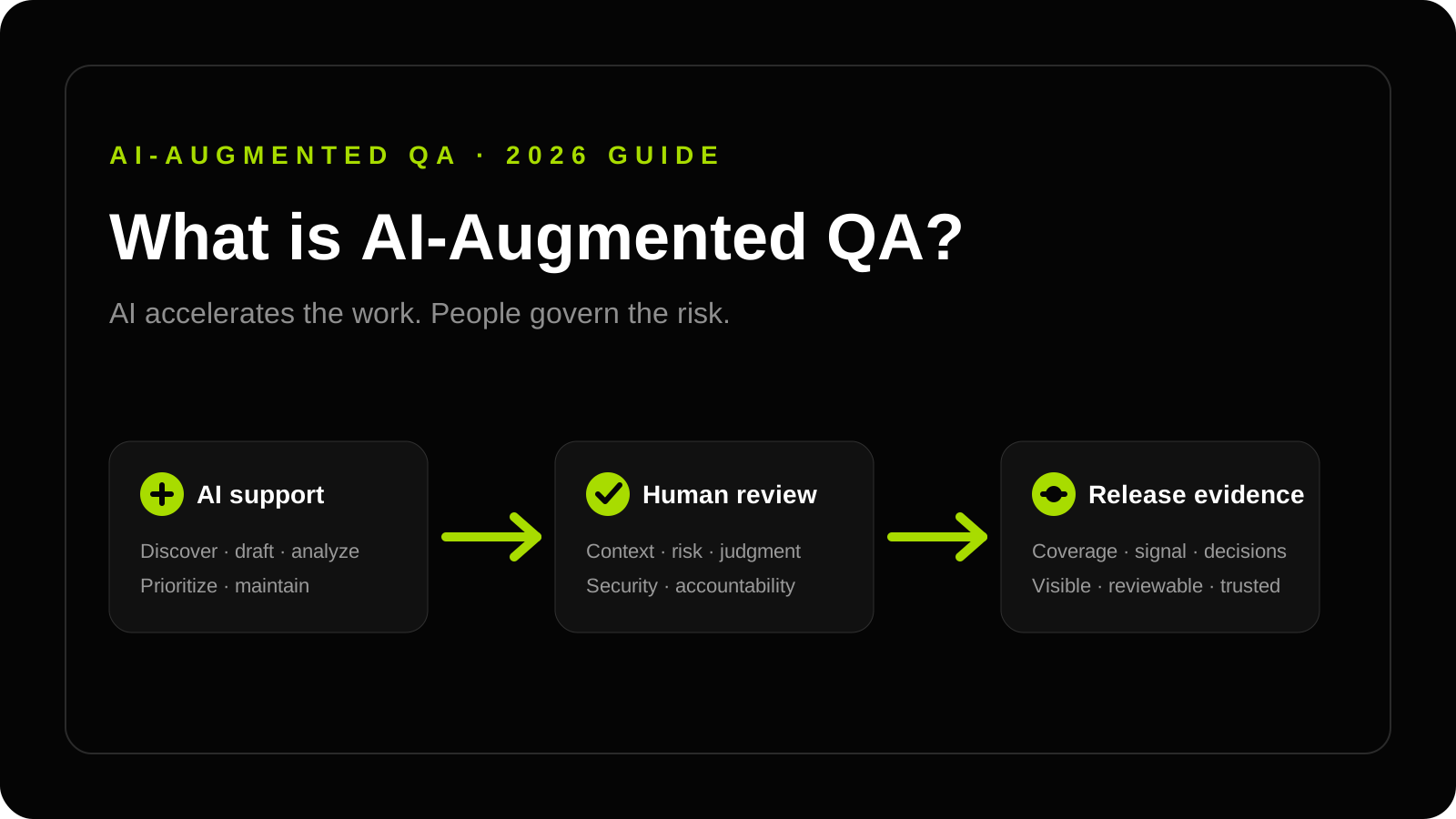
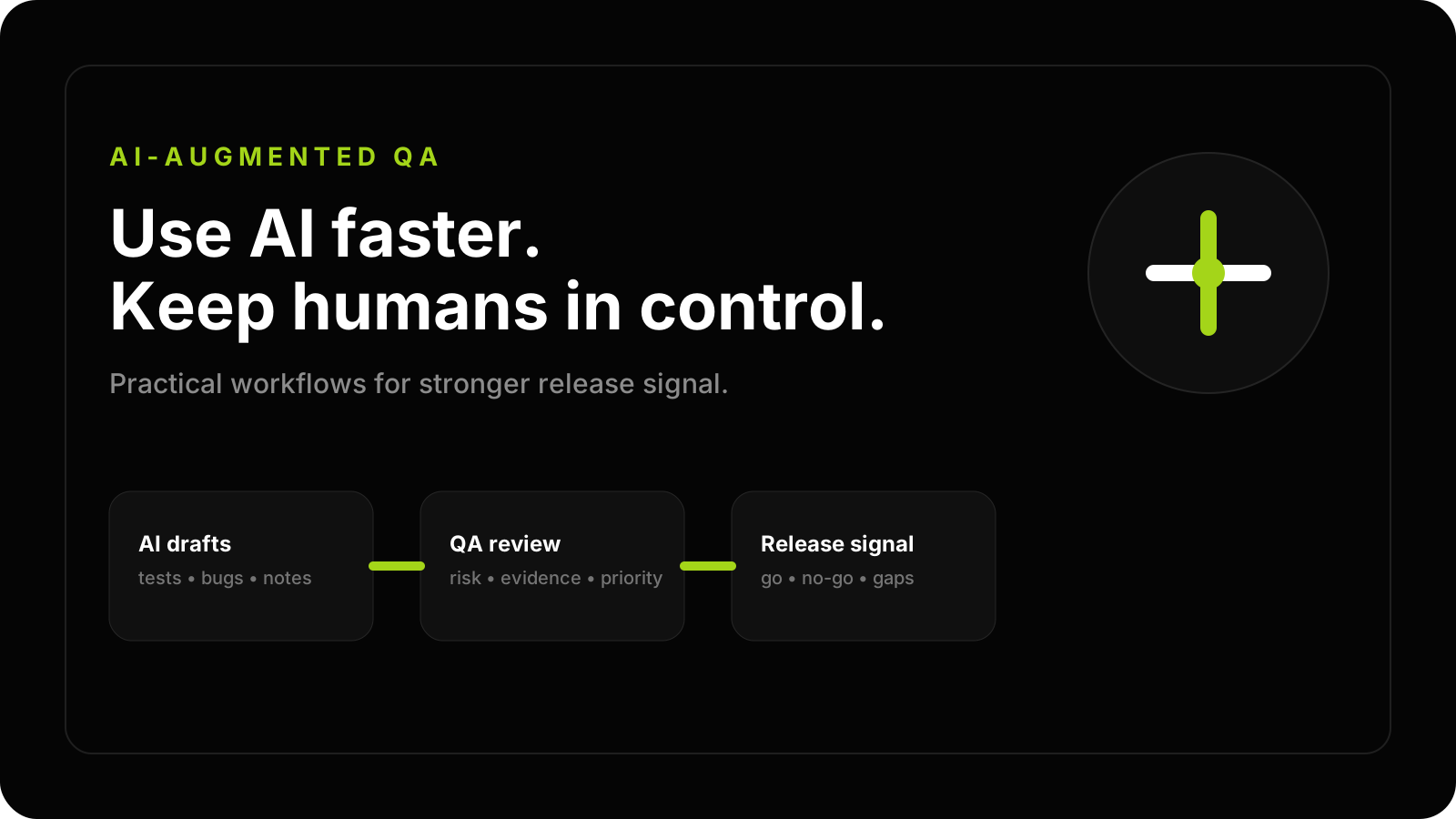
This is the foundation of AI Augmented QA: AI expands a team’s capabilities through speed, scale and pattern recognition, while human judgment directs those capabilities using product context, risk priorities and professional accountability. By combining the strengths of both, teams can focus faster testing on the failures that matter most and turn technical output into trustworthy evidence for release decisions.
- AI is already accelerating test design, Playwright automation, test data creation and failure analysis, giving QA teams more capacity to improve coverage and investigate complex behaviour.
- Speed does not give AI complete product context. Requirements rarely capture every architectural dependency, customer expectation, previous incident or business consequence that should influence what gets tested.
- An AI-generated test can execute successfully while validating an incomplete outcome. Engineers define the test oracles, assertions and failure conditions that determine whether a passing result proves the right system behaviour.
- Human governance does not require manual approval for every AI action. Qualified QA professionals establish the technical standards, apply review according to product risk and decide whether generated automation is reliable enough to influence CI/CD.
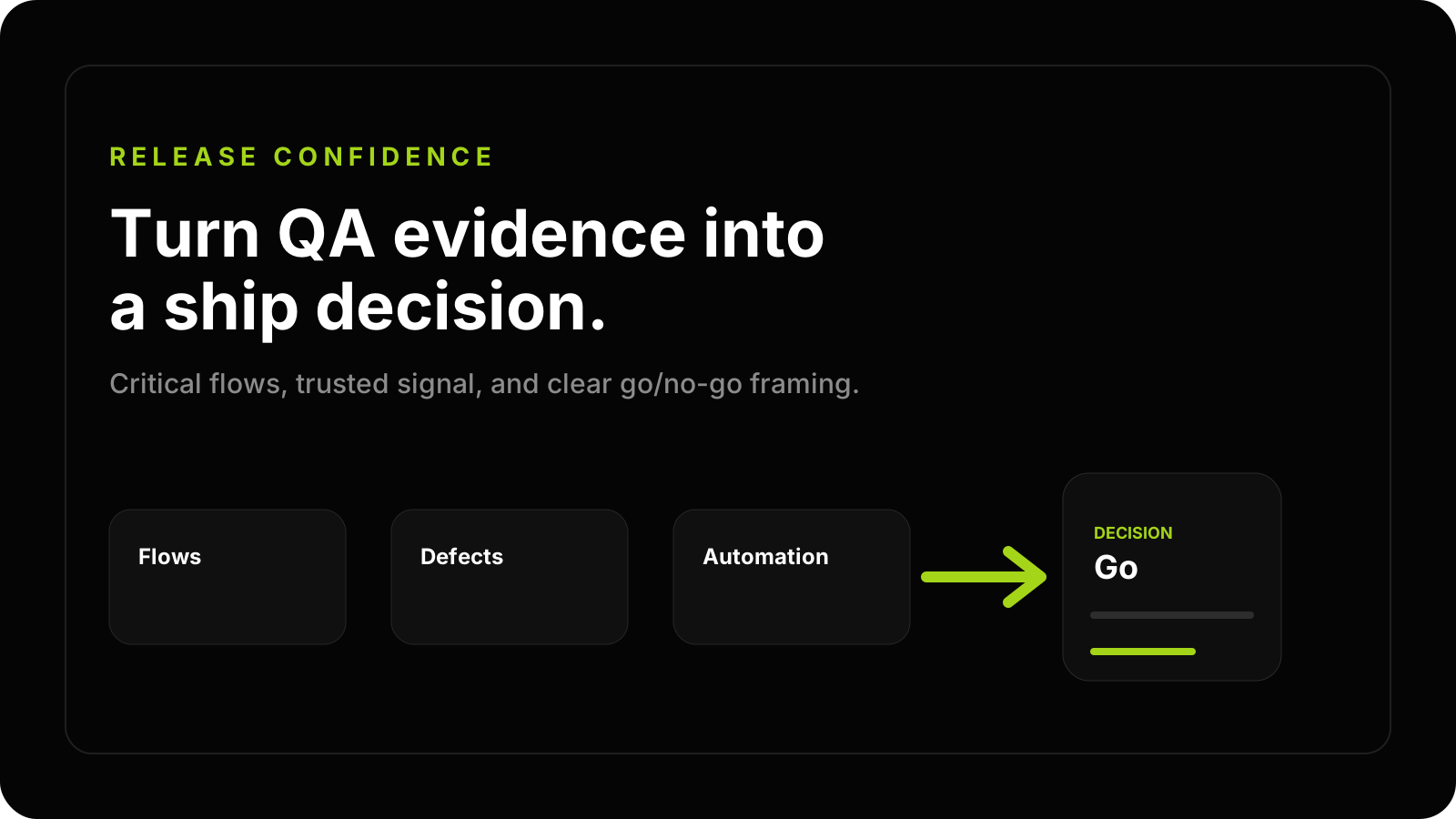
- The value of AI Augmented QA should be measured through stronger critical flow coverage, stable automation and more trustworthy release evidence rather than the number of tests or scripts generated.
What Is Human-Governed AI Testing?
Human-governed AI testing is an AI-Augmented QA model in which generative and analytical AI accelerate test design, automation development, test-data creation, regression analysis and failure triage, while qualified QA professionals retain control over risk prioritisation, validation criteria, technical quality and release decisions.
In practice, human governance means QA engineers remain responsible for:
- translating product requirements, system architecture, production incidents and business risks into traceable test objectives;
- validating AI-generated test scenarios, Playwright code, selectors, assertions and test-data combinations before they enter the regression suite;
- defining reliable test oracles: the rules and evidence used to determine whether system behaviour is correct;
- identifying coverage gaps across critical flows, integrations, permission boundaries, failure states and recovery paths;
- distinguishing product defects from automation defects, unstable environments, invalid test data and flaky execution;
- configuring meaningful CI/CD quality gates and interpreting the remaining risk before a release proceeds.
AI accelerates generation and analysis at scale, while automation transforms those capabilities into consistent, repeatable execution. Human expertise determines whether the tests represent the product correctly, whether the evidence is trustworthy and whether the remaining release risk is acceptable. This is what turns AI-generated testing output into a QA system the business can rely on.
Why Human Judgment Matters More as AI Moves Faster
AI has accelerated test creation without reducing the complexity of the product risks that teams must identify, evaluate and control.
Teams can now generate scenarios, automation code and test data in minutes, but the value of that output still depends on the context behind it, the quality of its assertions and the risks it actually covers.
AI Only Knows the Context It Receives
Product knowledge rarely exists inside one user story. It is spread across architecture decisions, previous defects, production incidents, customer behaviour and assumptions shared inside the team.
AI may test the documented requirement correctly while missing the conditions surrounding it. Human testers connect generated scenarios to the wider product and identify what the specification left unsaid.
A Passing Test Can Still Prove the Wrong Thing
A generated Playwright test may complete a checkout and confirm that a success message appears.
But does it verify that the payment was processed only once? That the correct state was persisted? That downstream systems received accurate data?
Executable automation is not automatically reliable evidence. The test oracle, assertions and failure conditions still require technical judgment.
The Goal Is Trusted Evidence, Not More Tests
Teams get AI testing wrong when they measure the number of generated tests instead of the critical risks those tests protect. More automation can also create duplication, flaky execution and maintenance noise without improving release confidence.
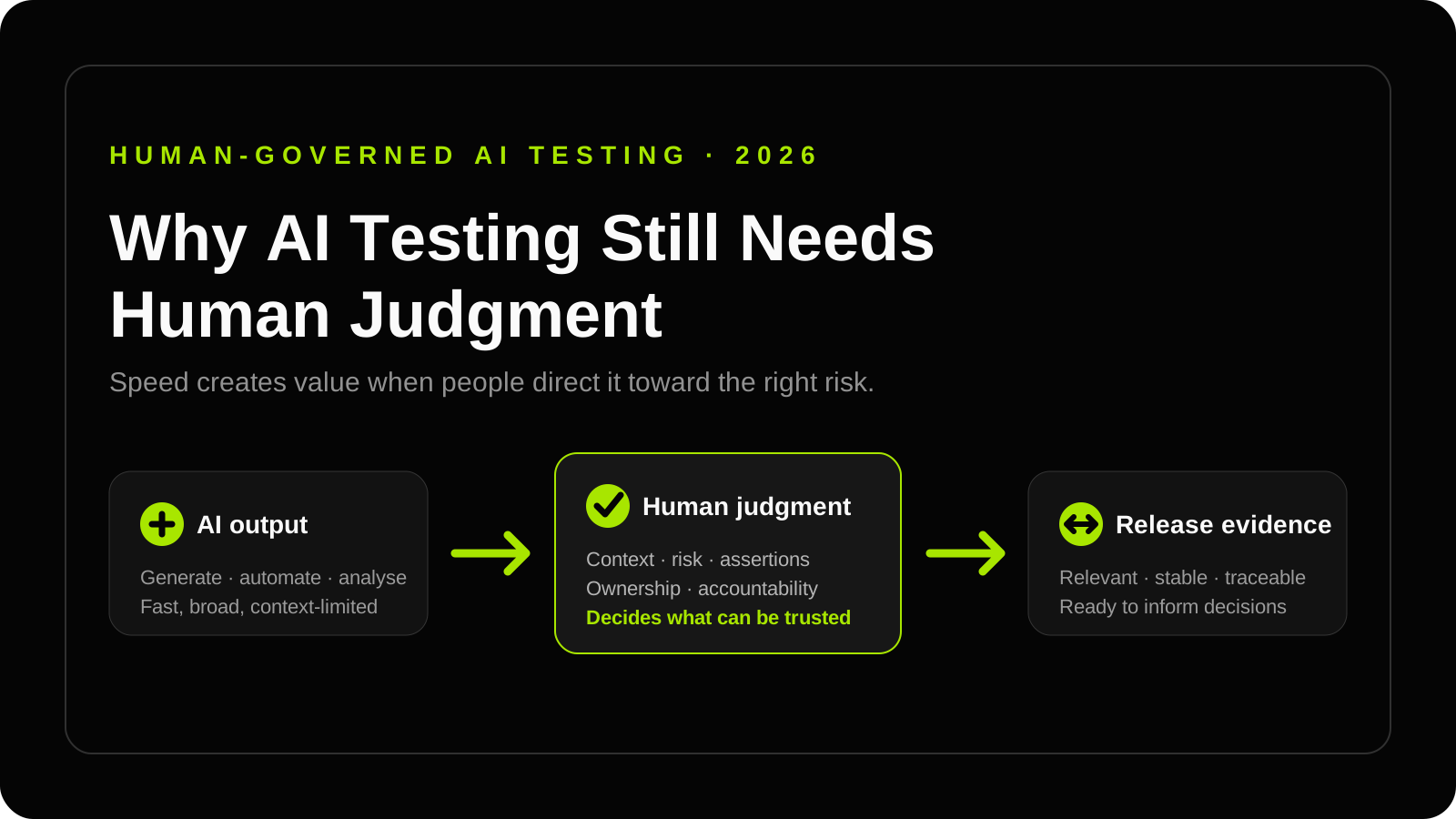
A qualified QA engineer validates the assumptions, coverage, assertions and reliability of AI-generated tests before they enter CI/CD. AI provides speed and scale, while human judgment determines whether the resulting evidence can be trusted.
This principle is also reflected in GitHub’s guidance on AI-generated tests and ISTQB’s Testing with Generative AI guidance.
From AI Output to Reliable Release Evidence
AI delivers the greatest value when its speed is supported by clear engineering ownership. Within a release confidence operating model, human governance changes not only the quality of individual tests but also the reliability of the evidence used to determine whether a release can proceed.
The Most Common Mistakes Teams Make With AI Testing
The real limitation often lies not in the AI tool itself, but in the underlying QA system it is expected to expand. When test ownership is unclear, environments are unstable and automation architecture is difficult to maintain, AI increases the volume of work without resolving the weaknesses underneath it.
They Allow AI to Multiply Existing Technical Debt
AI-generated automation naturally reflects the repository, patterns and examples it receives. If the existing suite relies on duplicated helpers, fragile selectors, inconsistent naming or tightly coupled test data, those weaknesses can be reproduced across dozens of new tests.
Experienced QA automation engineers address the foundation first by establishing reusable components, deterministic test data, stable integration boundaries and clear coding standards. Their role is not limited to correcting generated scripts; they create the technical conditions that allow AI-assisted automation to remain reliable as the product evolves.
They Generate Tests Without Creating Ownership
A test becomes valuable only when the team understands why it exists, which risk it protects and who is responsible for maintaining it. Without that ownership, generated tests accumulate inside the regression suite until failures are ignored, execution time grows and outdated scenarios continue running long after their original purpose has disappeared.
Engineers prevent this by connecting tests to product risks, placing them within a maintainable architecture and defining when they should be reviewed, updated or removed. This transforms AI-generated code from temporary output into an accountable engineering asset.
They Track AI Activity Instead of Quality Outcomes
Generating more prompts, tests or scripts may look like progress, but it does not show whether the product is safer to release. The real signal is whether the team catches important defects earlier, trusts the automation and can maintain reliable coverage as the product changes.
This is where skilled QA engineers create leverage: they evaluate how the complete system performs, identify where AI genuinely improves delivery and refine the workflow when additional automation produces more noise than evidence.
What Good Human-Governed AI Testing Looks Like
Once the common mistakes are understood, the next question is what effective human governance looks like in practice. A strong model does not apply the same level of oversight to every AI-generated test, but creates clear boundaries around risk, accountability and the evidence required before automation can influence a release.
Review Depth Matches Product Risk
A test covering a minor interface change does not require the same scrutiny as one protecting payments, permissions, customer data or a complex integration. Engineers apply deeper review where the consequence of an incorrect result is greater, while routine scenarios can move faster through established patterns and automated controls.
This risk-based approach preserves the speed of AI without treating every generated asset as equally trustworthy or equally important.
Every Test Has a Traceable Purpose
Reliable automation should connect to a requirement, business rule, failure mode or known product risk. When AI generates a test, the team should understand why that test exists, what evidence it captures and which conditions would require it to be updated or removed.
Traceability makes reviews more consistent and prevents the regression suite from becoming a collection of technically valid scripts with no clear relationship to release confidence.
Reliability Is Proven Before the Approach Is Scaled
AI testing should be evaluated on a representative critical flow before it is expanded across the wider product. Teams can observe whether the generated coverage reflects meaningful failure paths, whether execution remains stable and whether engineers can understand and maintain the resulting automation.
Scaling becomes justified when the approach repeatedly produces useful evidence under realistic delivery conditions. This creates an engineering system in which the level of human oversight matches the consequence of being wrong, while AI continues to provide speed where that speed creates genuine value.
Build an AI Testing Capability Your Team Can Trust
AI creates lasting value when it becomes part of a quality system that engineers can understand, maintain and improve over time. The objective is not simply to generate more tests, but to establish a reliable connection between product risk, automation evidence and the decisions that determine whether software is ready to be released.
AQA Masters helps product teams build that connection by combining AI-augmented workflows with QA architecture and engineering leadership. The approach is adapted to the product, delivery process and existing technical environment, allowing AI to accelerate quality engineering while experienced professionals retain responsibility for validation, prioritisation and release judgment.
If your team is exploring AI testing or trying to bring structure to existing experiments, a conversation with a QA architect can clarify where AI can create practical value and what foundations are required for that value to remain reliable as the product evolves.
Talk to a QA Architect About AI Testing
See what AI can contribute when experienced engineers are responsible for turning its capabilities into trustworthy results.