



Regression testing becomes expensive when it grows without strategy. Teams add checks after every incident, keep old cases because nobody wants to delete them, and eventually run a suite that is too slow to guide release decisions.
A better regression strategy starts with risk.
Key takeaways
- Regression scope should be based on product risk and change impact, not habit.
- Keep a small trusted smoke suite separate from broader regression coverage.
- Use automation for stable repeatable checks and human testing for ambiguity, new behavior, and high-risk journeys.
Why regression suites become slow
Regression suites usually become slow for three reasons.
First, they treat all coverage as equal. A rarely used admin edge case and a revenue-critical checkout flow may both appear as one test case, even though their release impact is very different.
Second, they mix stable checks with exploratory work. Repeatable behavior belongs in automation when the value is clear. New, ambiguous, or high-judgment behavior often needs human testing.
Third, they fail to retire low-value tests. If a check no longer protects a real risk, it should be rewritten, moved, or removed.
Risk-based regression layers
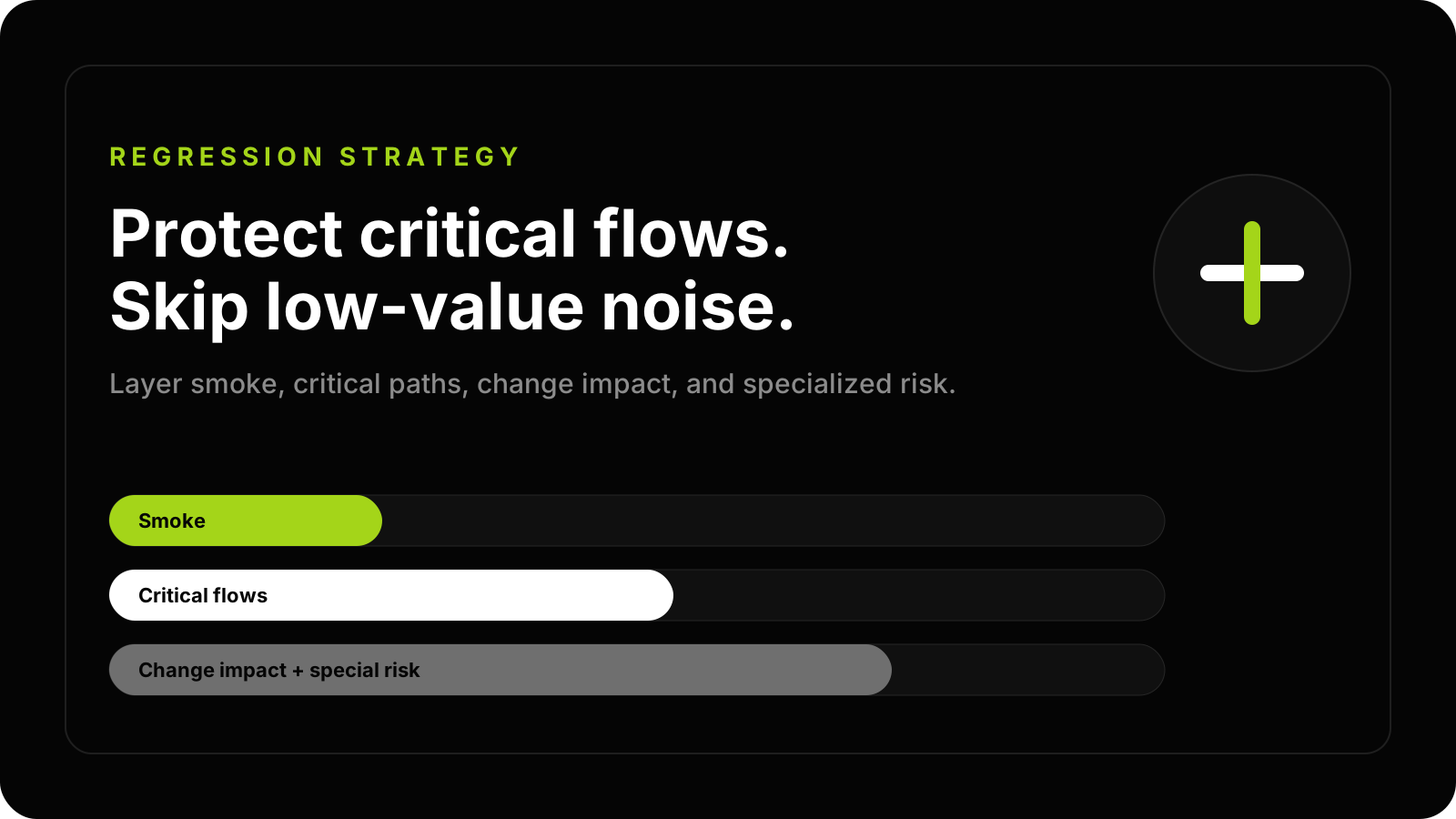
Use layers instead of one giant suite.
Smoke layer
The smoke layer protects the smallest set of flows that must work before deeper testing continues. It should be fast, stable, and trusted.
Critical-flow layer
This layer protects journeys with high user, revenue, operational, compliance, or trust impact. It should include areas such as signup, payment, onboarding, permissions, data integrity, and core workflows.
Change-impact layer
This layer changes with every release. If the team modifies billing, API contracts, search, AI prompts, or permissions, regression scope should follow that risk.
Specialized risk layer
Some changes require targeted API, performance, accessibility, security, ETL, or AI product checks. These should be triggered by the type of risk, not by a fixed checklist.
Automation and manual balance
Automation should protect behavior that is stable, repeatable, important, and expensive to check manually. It should not be used to hide unclear requirements or unstable environments.
Manual testing should focus on new behavior, user experience, exploratory paths, ambiguous acceptance criteria, accessibility barriers, and complex defect investigation.
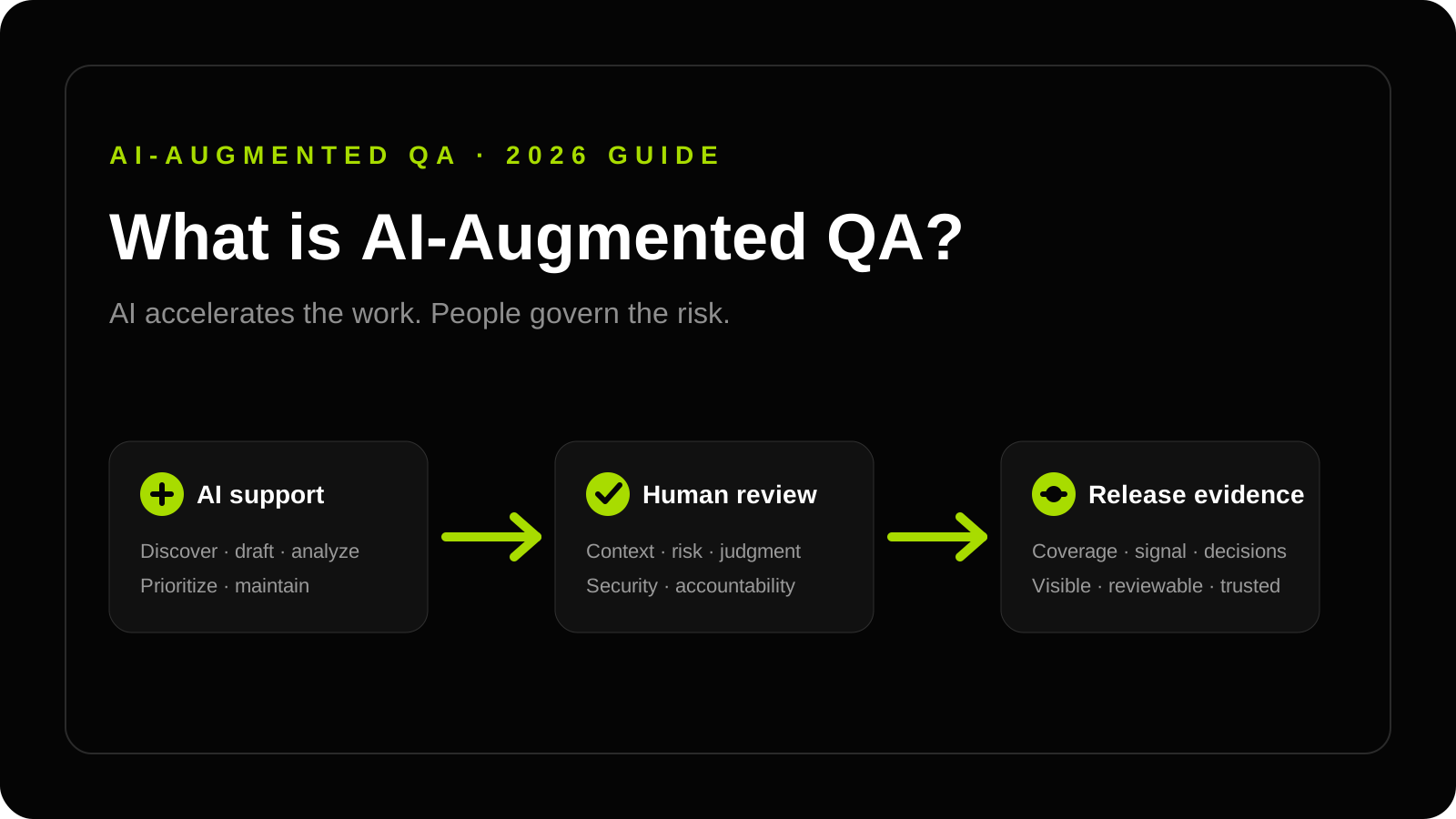
AI-Augmented QA can help analyze change impact and propose regression scenarios, but a human QA owner should decide what matters for the release.
Regression reporting
A regression report should not only say how many tests passed. It should explain:
- Which critical flows were covered.
- Which areas were skipped or not testable.
- Which failures were product defects versus automation or environment issues.
- Which defects block release.
- Which known risks remain.
- What the QA recommendation is.
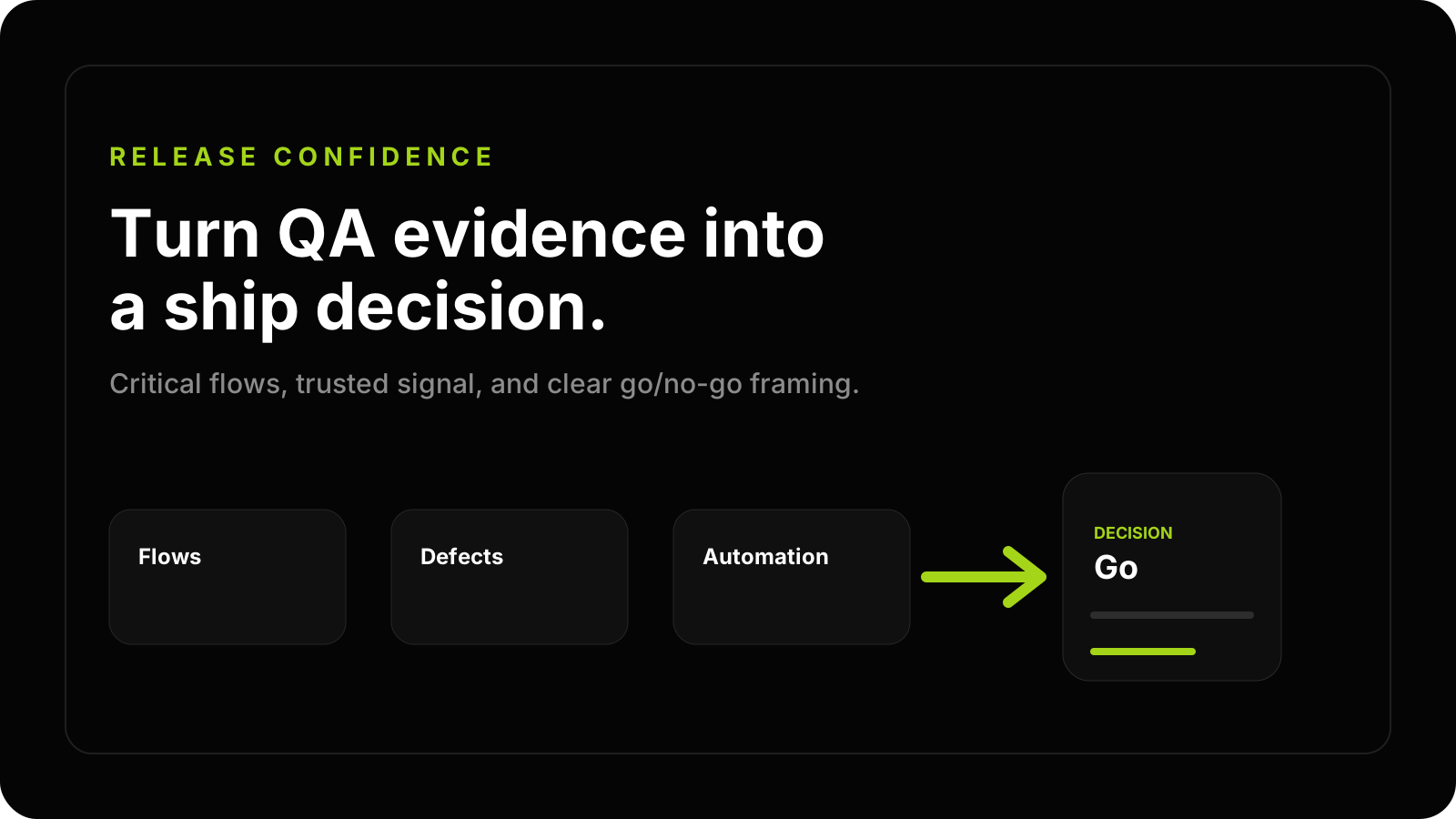
This reporting connects regression work to release confidence. If your team needs AQA Masters to operate that model continuously, Managed QA Delivery can turn regression testing into decision-ready evidence.
The best regression suite is not the largest one. It is the suite that helps your team release faster because everyone understands what risk was checked and what risk remains.
Common questions
01 What should be included in regression testing?
02 Should regression testing be fully automated?
03 How often should regression testing run?