



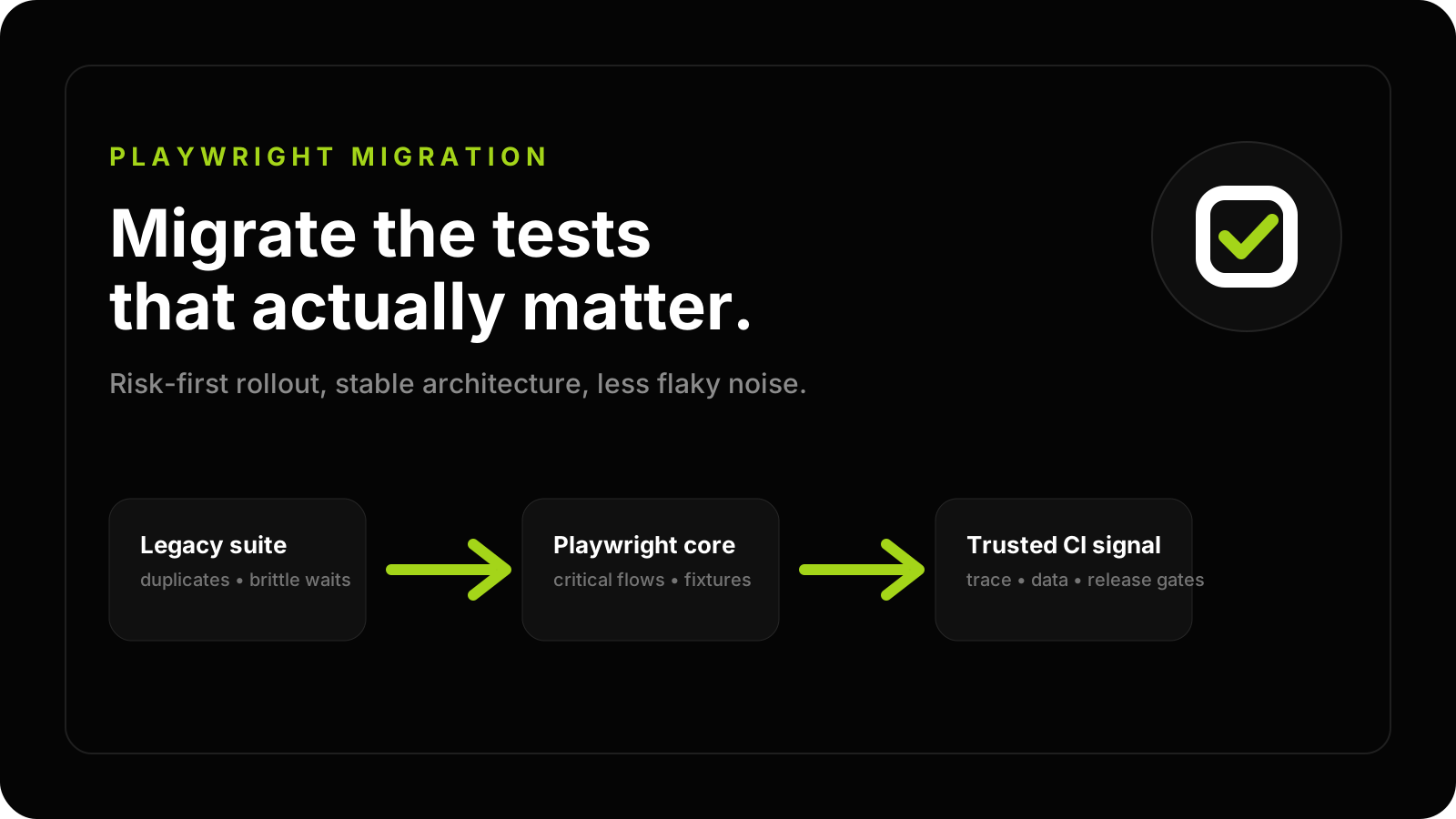
Playwright can improve browser automation speed and reliability, but migration alone does not guarantee better release signal. If a team copies every brittle legacy test into a new framework, it often recreates the same problems with newer syntax.
A strong Playwright migration is not a translation project. It is a quality-system upgrade.
Key takeaways
- Do not migrate every legacy test one-for-one; migrate by release risk and signal value.
- Define architecture standards before teams create hundreds of inconsistent Playwright tests.
- Treat CI stability, test data, and debugging workflow as migration deliverables.
Before you migrate
Start by auditing the current suite. Identify which tests catch real defects, which tests fail for environmental reasons, and which tests nobody trusts.
Group tests into four buckets:
- Critical flows that must be protected in Playwright first.
- Useful checks that can be migrated after the architecture is proven.
- Duplicate or low-value tests that should be retired.
- Unclear tests that require product or engineering review before migration.
This prevents the team from wasting migration time on checks that never improved release confidence.
Architecture checklist
Create architecture standards before the first large batch of tests lands.
Your checklist should cover:
- Project structure and naming conventions.
- Locator strategy and accessibility-friendly selectors.
- Page object or screen object boundaries.
- Fixture and helper patterns.
- API setup and teardown strategy.
- Assertion standards that prove meaningful behavior.
- Screenshot, trace, and video rules for debugging.
- Review expectations for generated or AI-assisted test code.
The Test Automation Modernization approach should leave your team with a maintainable baseline, not only migrated scripts.
CI and data checklist
Many automation problems are data problems. Before scaling Playwright, define how tests create, isolate, and clean up data.
Ask:
- Can tests create the users, accounts, orders, permissions, or records they need?
- Which flows require seeded data?
- Which tests are safe to run in parallel?
- Which environments are stable enough for release gates?
- What should block a merge, block a release, or trigger investigation only?
Use CI results as release evidence, not as a vanity metric. A smaller suite that reliably protects critical behavior is more valuable than a large suite that creates noise.
Migration rollout plan
Roll out Playwright in stages.
First, prove the architecture on a small number of high-impact flows. Then integrate those tests into CI with trace capture and clear reporting. Next, migrate additional regression coverage by risk priority. Finally, retire legacy checks once Playwright coverage is trusted.
If the existing suite is already unstable, use the Rescue path within Test Automation Modernization before or during migration. Some problems should be fixed at the automation-system level rather than copied into a new framework.
Playwright is a strong tool. The strategic advantage comes from using it to create cleaner release evidence, faster debugging, and a suite your team actually trusts.
Common questions
01 Should teams migrate every Selenium or Cypress test to Playwright?
02 What causes Playwright tests to become flaky?
03 How long does a Playwright migration take?