



Choosing a QA vendor is not only a procurement decision. It is a release-risk decision. The wrong partner can add testing hours while leaving product leaders with the same question before every launch: “Do we actually know what can break?”
The right partner should make release decisions clearer. They should understand your product, expose risk early, improve the quality of bug evidence, and help your internal team keep ownership of the QA system.
Key takeaways
- The best QA vendor helps you own a stronger quality system, not just a larger testing queue.
- Ask vendors to explain how they prioritize critical flows, automate safely, and report release risk.
- Run a small diagnostic engagement before signing a long delivery contract.
What a good QA vendor should protect
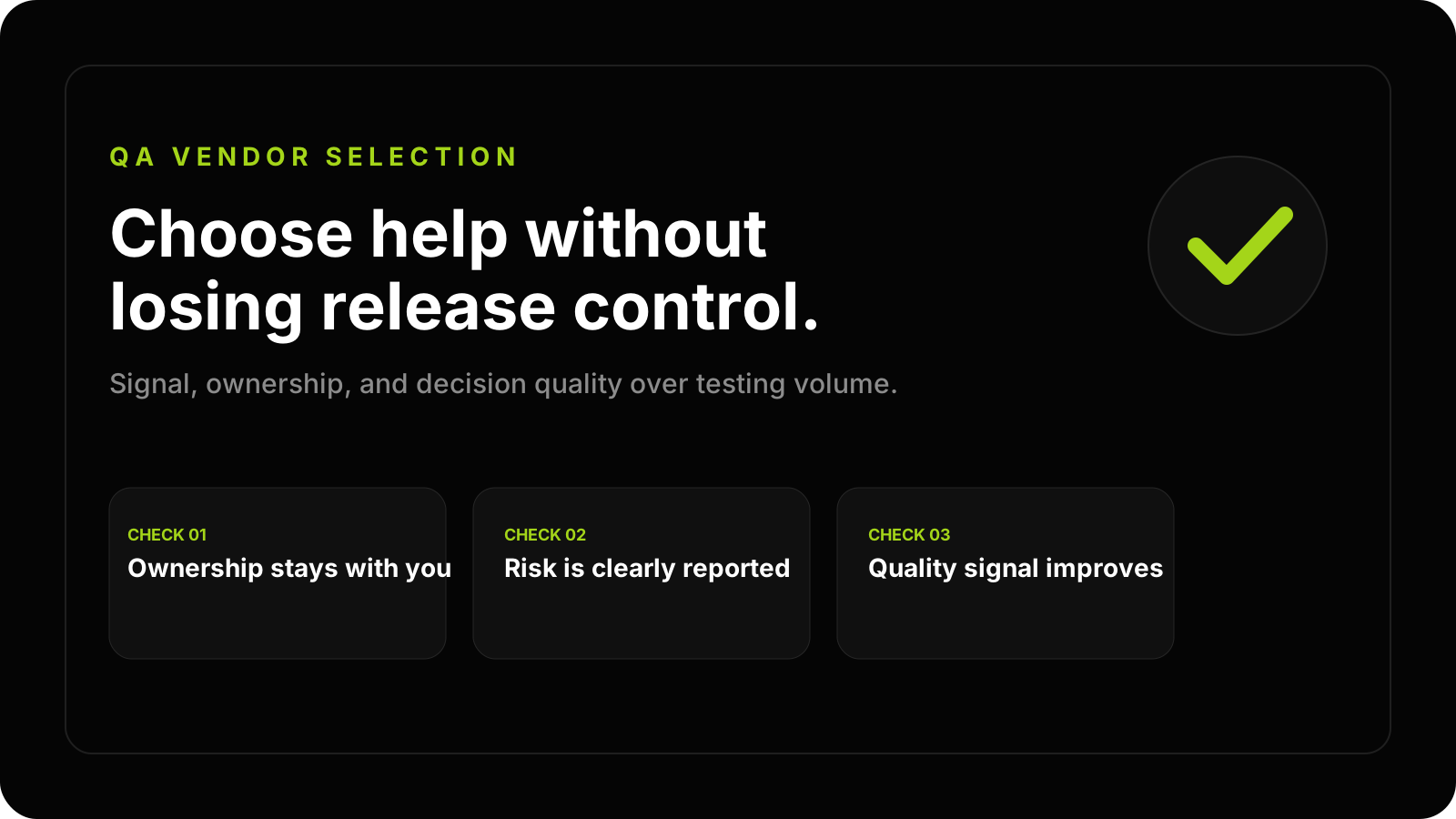
A strong QA partner protects three things.
First, they protect critical user journeys. For many teams, the highest-value flows are not the longest flows. They are the flows connected to signup, payment, onboarding, permissions, data trust, AI output quality, or operational continuity.
Second, they protect engineering signal. QA should help engineers reproduce problems faster, understand severity, and decide what must block release. If a vendor floods the team with duplicate bugs, weak steps, or vague screenshots, they create noise instead of confidence.
Third, they protect client ownership. Test cases, automation architecture, risk models, regression suites, and release reports should be understandable and maintainable by your team. A vendor should not become the only group that understands how your quality system works.
Vendor evaluation criteria
Use these criteria before comparing price or team size.
Product-risk thinking
Ask the vendor how they would identify the most important flows to test first. Good answers mention business impact, change frequency, integration risk, historical defects, user roles, data paths, and release timing.
Weak answers jump directly to “we will test everything” or “we will create test cases from requirements.” Exhaustive language often hides the absence of prioritization.
Release-confidence reporting
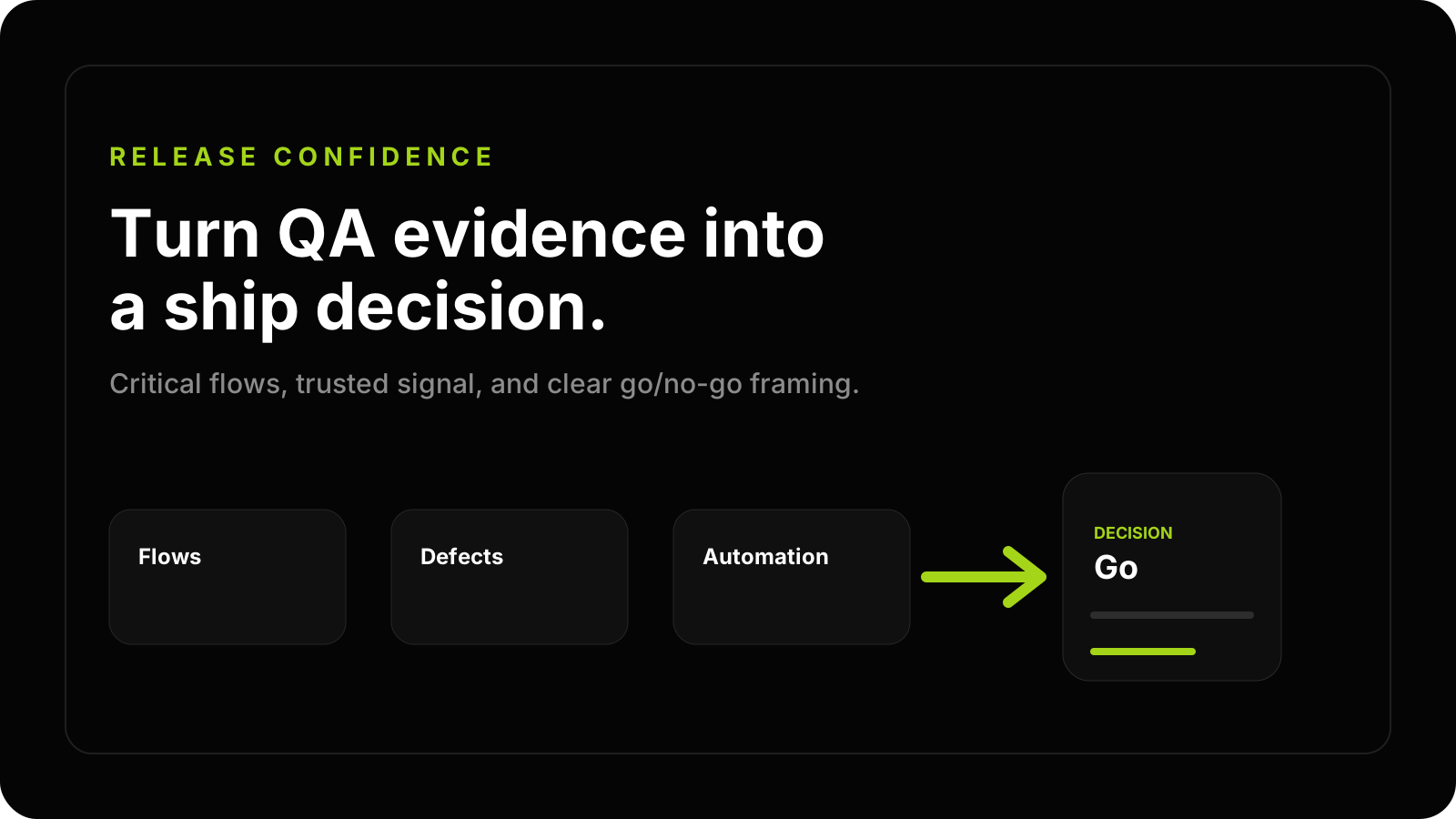
A vendor should be able to explain how leaders will know whether a release is ready. Look for release notes that distinguish tested areas, untested areas, known risks, blocked scenarios, severity patterns, and recommended go/no-go decisions.
This is where a structured engagement such as Managed QA Delivery becomes valuable. It turns testing activity into recurring decision evidence.
Automation judgment
Automation is valuable when it protects stable, repeatable, high-impact behavior. It is expensive when it captures unstable UI paths, unclear data states, or assertions that do not prove meaningful behavior.
Ask vendors how they decide what not to automate. A mature answer is more useful than a promise to automate every scenario.
Communication quality
Review sample bug reports, test summaries, and risk notes. The best QA vendors make defects easy to reproduce and easy to prioritize. They write for product managers, engineers, and release owners, not only for testers.
Accessibility, security, and specialized coverage
Modern QA often needs more than functional checks. If your product has public web flows, regulated users, payments, sensitive data, AI behavior, or performance-sensitive journeys, ask how the vendor handles accessibility, security, API, performance, and AI product testing.
Questions to ask before signing
Ask these questions in the first vendor conversation:
- Which product flows would you test first, and why?
- How do you separate release blockers from lower-priority findings?
- What QA assets will we own at the end of the engagement?
- How do you prevent automation from becoming flaky or impossible to maintain?
- What does a weekly release-risk report look like?
- How do you handle unclear requirements or missing acceptance criteria?
- How will your team work with engineering without slowing delivery?
The answers should be specific. If the vendor cannot explain their operating model before the contract, they are unlikely to create clarity after the contract.
A safer selection process
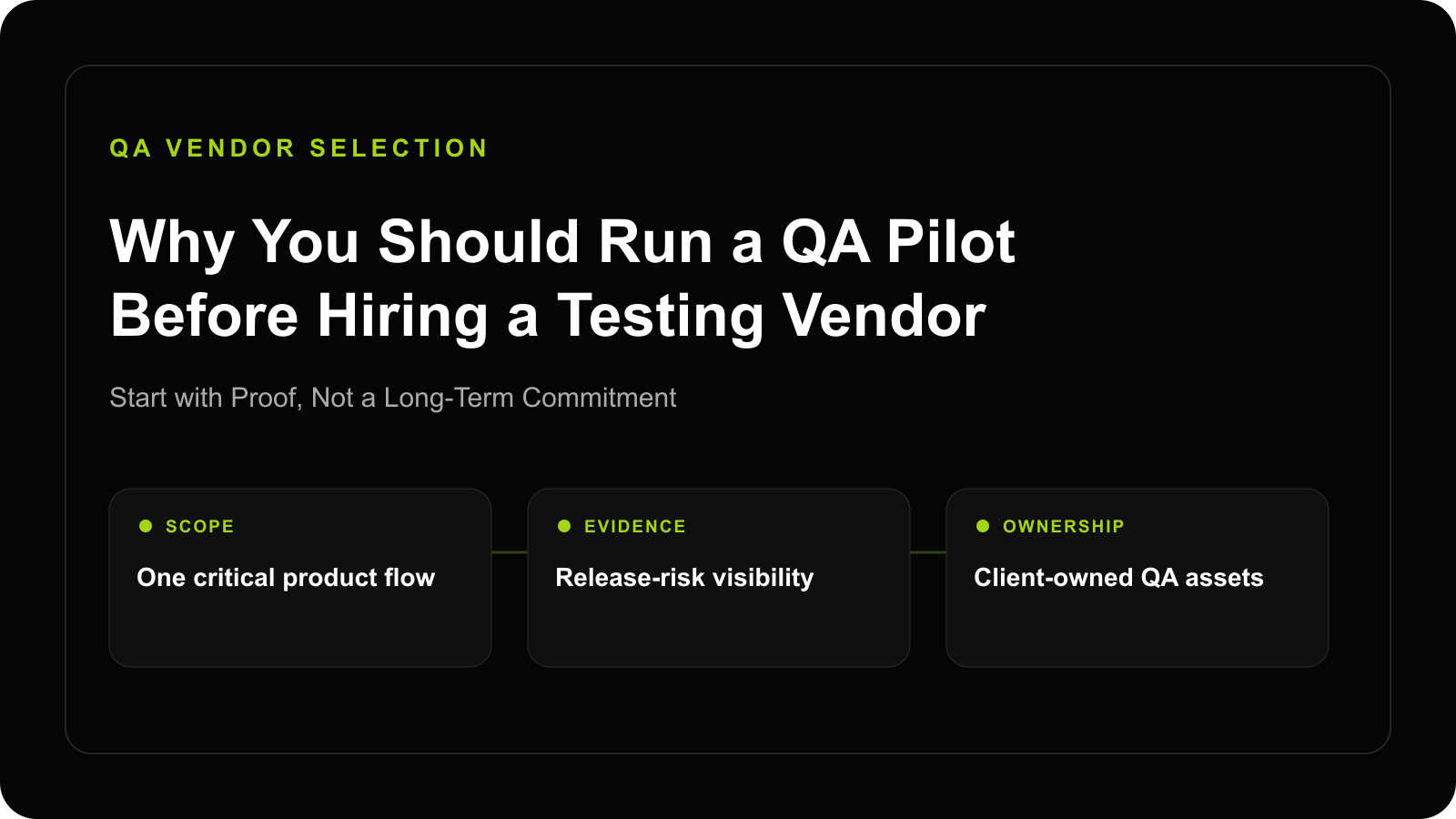
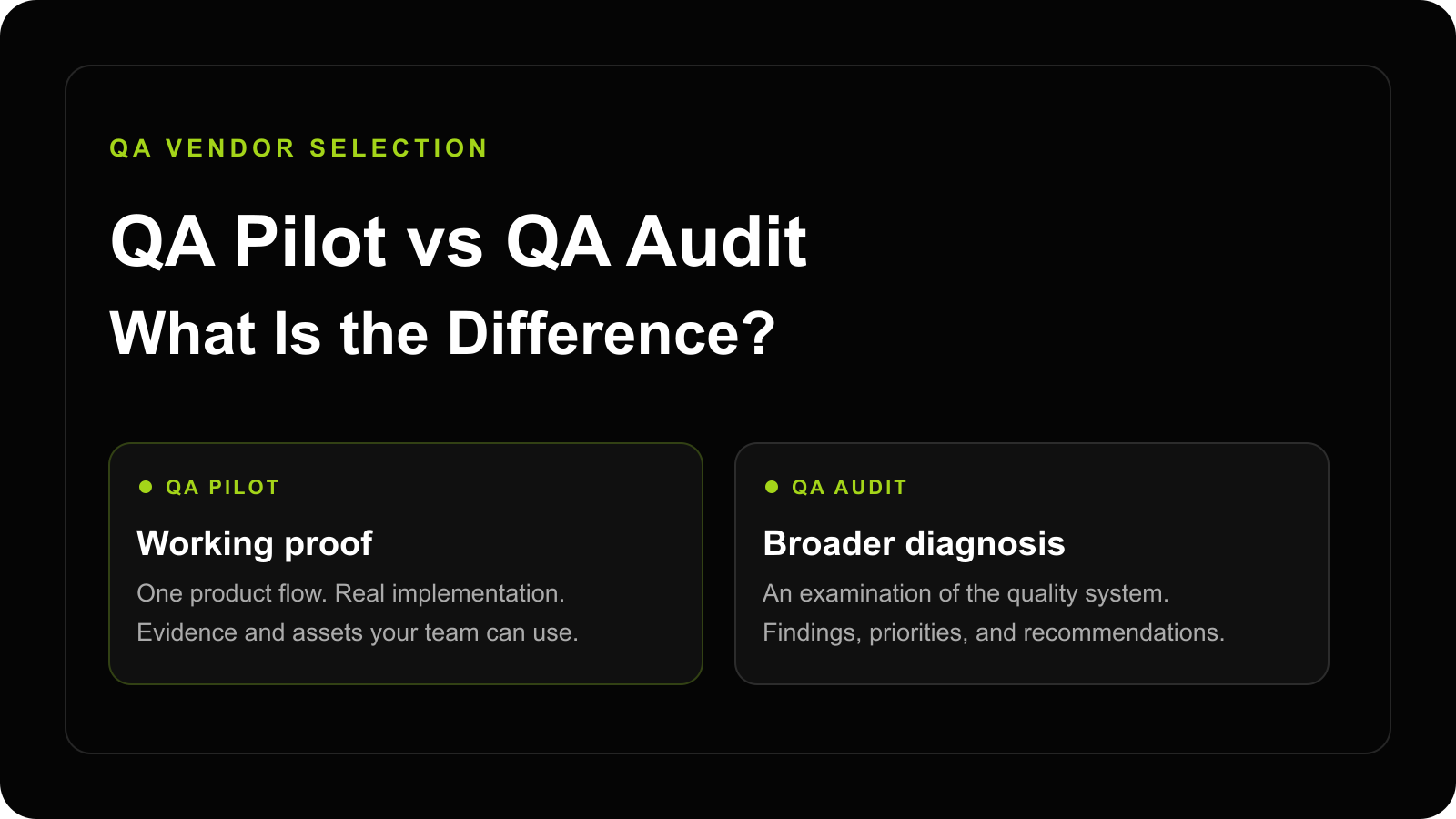
Do not begin with a long contract. Start with a focused diagnostic.
The 14-Day AI-Augmented QA Pilot is one example of this safer path. A short pilot lets the vendor inspect real flows, identify current release risk, demonstrate reporting quality, and recommend the right delivery model before a larger commitment.
During the pilot, evaluate whether the vendor improves your team’s understanding of risk. You should leave with a sharper map of what matters, not just a list of defects.
If your existing team needs architecture, operating leadership, or focused specialist execution, QA Leadership & Enablement can add the missing capability without replacing its product context. If you need AQA to run a recurring delivery layer, Managed QA Delivery can provide capacity while keeping the system client-owned.
The best QA vendor does not make quality feel outsourced. They make release confidence easier for your own team to understand, govern, and improve.
Common questions
01 What is the most important QA vendor selection criterion?
02 Should we choose a QA vendor by hourly rate?
03 How should we test a QA vendor before committing?